
8th February, 2026
🚶Walking backwards into the future

When was good?
It seems that nearly everybody agrees, at this moment in history, that things are currently not good.
So here’s a question I’ve been asking people. Let me expand the sample group…
When was good?
Your answer might reveal more about your politics than you realise.
Maybe you think back fondly to 2019? Pre-pandemic, when the mood was much more “let’s do this” than “the tank is empty”.
Or, maybe you want to go back to 2016. That seems to be a popular answer, for younger people especially.
Why not? TikTok was the sound of a clock. Donald Trump was a reality television star. The UK was still part of the EU and NZ had “a rockstar economy”, fuelled by high house prices and immigration, and overseen by a chilled out entertainer.1 That is, as best I can tell, the track we want to get back on.
What about rewinding to the early 90s? Curiously, we’re often most nostalgic for our teenage years - coinciding with what researchers at the University of Leeds dubbed “the emergence of a stable and enduring self.”2 For me that was 1989 to 1995. The time of Windows 3.1. Friends. Jordan and Jonah. But seriously… Nevermind. The only famous “Kardashian” back then was OJ’s lawyer.
That also overlaps almost exactly with the political era documented by Toby Manhire in the second season of his podcast Juggernaut. By tracking Spotify data researchers can show that most people stop actively seeking new music genres after they are in their 20s. Is the same true of political ideas or do those ossify later?
Perhaps you look even further back, to the 1950s or 1960s when men were men, nothing of consequence was Made in China, the USA and USSR were the goodies and baddies respectively (which was which depended on your context and perspectives).
When politicians overseas talk about making things “great again” this is roughly the era they all seem to be referencing. Maybe the teenage-years phenomenon explains this too?
With the notable exception of Barack Obama (born 1961), US Presidents have been getting one year older each year my whole adult life. Bill Clinton, first elected in 1992, was born in 1946. He was followed by George W Bush, also born in 1946. Donald Trump was also born in 1946. Joe Biden is four years older than those three, born in 1942. I’m not sure history will judge kindly baby boomers who continue to elect their contemporaries well into their 70s and even 80s.
And, before we get too smug in NZ, perhaps worth noting that Winston Peters - who based on current polling is likely to once again hold the balance of power after our election later this year - was born in 1945.
Others seem to look back fondly even further than that - to 1840, when by some accounts NZ was an unspoiled Pacific paradise (although the days were shorter), or even to 1760, before the Industrial Revolution saw people around the world start to use fossil fuels to manufacture everything we wanted to make our lives better.
So let’s hear your answer: when was good?
Progress & Decline
Cleaning up some old posts on my personal website recently I came across this post:
⌘-SHIFT-⌥-ESCAPE, 4th January 2016
Between 2008 and 2015 I posted these “annual reviews” at the end of each year. This one specifically happened to be the last thing I ever posted to that blog.
Reading back, it feels like opening a time capsule. I was still in my 30s (just). Our kids were … still kids. I wrote optimistically, and with the benefit of hindsight accurately, about Vend and Timely as high growth companies with potential. I didn’t realise it at the time but I was a few months away from starting arguably the best year of my life3 - one which taught me how malleable time actually is when you’re intentional.
Either way, it’s confronting to be hit with a whole decade of progress and decline at once.
When I shared the link with an old friend they made this observation:
… one of the trends this illustrates is that the data-driven self (you know, like tools that visualize your annual travel history) is less prevalent than it was.
For my sins I’m still pretty quantified even now. I’m just not sure that the narrative the numbers stitch together is as flattering these days.
Matt Webb (whose long running blog Interconnected is one of the few I’ve followed throughout that decade and continue to be delighted by) wrote an excellent piece last year called “Strava when you’re not as quick as you used to be” where he reflected on “personal bests”:
As an on-and-off-again runner who is motivated each time round by getting better at it, slowing down is something I’ve had to find peace with. I’ve managed to do that now, it took a year or two, and finding a new internal place of motivation has meant that my training is once again enjoyable and free.
Strava is one of the few “social networks” I regularly use. But it constantly reminds me I’ll likely never again run 5km as fast as I did in 2017. Every time I revisit an old favourite segment the delta between what previously seemed effortless and now seems remarkable grows wider.4
May I humbly suggest to the (I assume much-younger-than-me) product managers they put more emphasis on “recent best” as a more motivating metric.
It’s easy to spiral on the negative. I’ve referenced Brian Eno’s “feeling that things are inevitably going to get worse” many times over the years:
More than a feeling, January 21, 2009
What if it comes to feel like there isn’t a long term—or not one to look forward to? What if, instead of feeling that we are standing at the edge of a wild new continent full of promise and hazard, we start to feel that we’re on an overcrowded lifeboat in hostile waters, fighting to stay on board, prepared to kill for the last scraps of food and water?
From this vantage point, 17 years later, his prediction from 2009 almost feel prophetic:
Humans fragment into tighter, more selfish bands. Big institutions, because they operate on longer time-scales and require structures of social trust, don’t cohere. There isn’t time for them. Long term projects are abandoned—their payoffs are too remote. Global projects are abandoned—not enough trust to make them work. Resources that are already scarce will be rapidly exhausted as everybody tries to grab the last precious bits. Any kind of social or global mobility is seen as a threat and harshly resisted. Freeloaders and brigands and pirates and cheats will take control. Survivalism rules. Might will be right.
At an individual level I think that idea about trying to grab precious scarce resources while you still can also explains mid life crises. You only get to be each age once, but it’s hard to be the age you are.
So how do you counter this, and foster a sense that things could possibly get better?
Here are three ideas, for starters:
Be honest about the past and how good it actually was (see above). Nostalgia is a highlight reel with the lowlights edited out. If you wouldn’t go back then maybe now isn’t quite as bad as it feels.
Pay more attention to progress in the present. We are ultimately what we consume. That’s true mentally as well as physically. Mostly our news diet is the equivalent of eating deep fried slop for every meal. As Hans Rosling went to great lengths to highlight while he was still alive, on almost every measure things have never been better.5 Or, Information is Beautiful’s annual summary of Most Beautiful News of the Year - with all the headlines you probably didn’t see. Let’s not blame journalists for this. We can’t expect them to rise much above the level of the general population’s appetite for news fuelled by fear, greed, and an ignorance that often manifests as suspicion of expertise. The algorithm doesn’t reward “things are gradually improving.” It rewards “everything is on fire.” Somehow, within that general overall upward trend we all have to deal with our own individual decline. But don’t forget the trend.
Choose leaders who focus less on their individual achievements and more on their contributions to others. To quote Adam Grant from his recent NY Times Opinion piece: “The responsibility of leadership is too important to entrust to arrogant people. Narcissistic leaders deny their weaknesses and make themselves weaker. Humble leaders admit their weaknesses and make themselves stronger. Great leaders overcome their weaknesses and make us all better.” His prescription, referencing research published in American Psychologist6 is maybe not what you'd expect: start by looking for ways to increase our own self-esteem, especially in childhood: “The lower our opinions of ourselves, the more insecure we’re feeling, the higher our opinion of narcissists.”
Hopefully some of you have even better suggestions. I’d love to hear them.
Get in behind
Speaking of nostalgia…
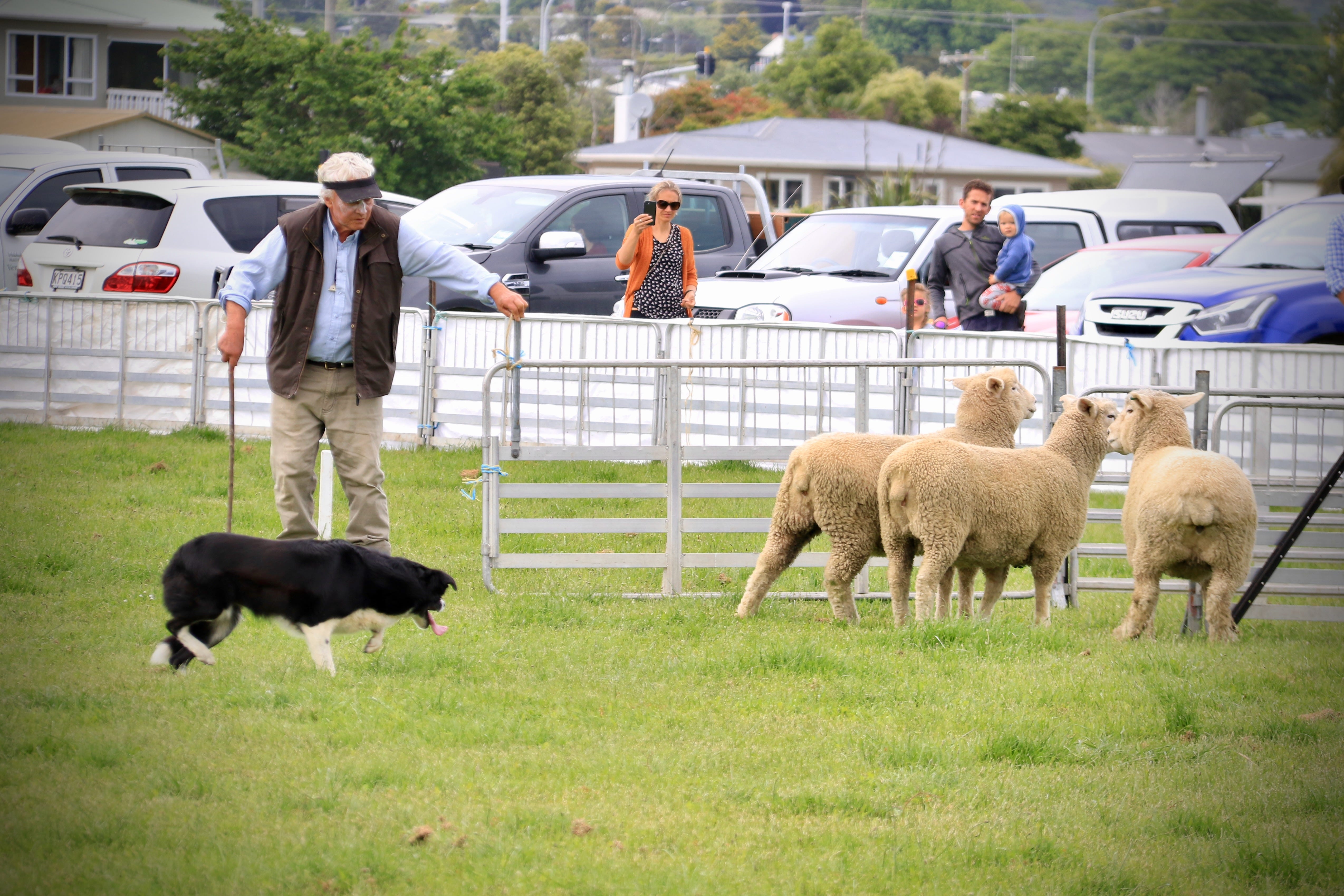
I remain in constant disbelief that TVNZ have not yet revived A Dog’s Show, in Drive To Survive style. I reckon it would be a ratings sensation.
Buy my book

See also:
Self-centered memories: The reminiscence bump and the self. Clare J. Rathbone, Chris J. A. Moulin & Martin A. Conway. (2008).
Others might separately nominate 2021, when both Vend and Timely were eight-figure exits for me, but I’m sticking with my selection for now - what you earn is the ticket to the game, how you spend it is ultimately what you’ll remember and maybe even be remembered for.
Every time I catch myself feeling stink about this I try to remember: be sad about the future, not the past.
There are 10 separate TED Talk videos in that playlist, and you should watch them all before you open any social media site.
The symbiosis of narcissistic leaders and low-self-esteem followers: Dominance complementarity in childhood. Nevicka, B., van den Hee, S. M., van Loenen, M., & Brummelman, E. (2025).
When was good?
For me personally, or for most people?
What is “good”? In my view things are good when you have security of health, housing, food and a peaceful country to live in.
Right now we have two societies: one is living with all of those things; the other is living a precarious life. Over the past 40 odd years the precarious group has got much larger. This fact is becoming recognised as a threat to the western way of life. Eventually it may threaten for everyone the peaceful country item on my list.
When you’re starving the right to vote is a luxury. Once things are “good” (on my definition of it) then other issues arise (discrimination, oppression etc) and can become very important. Some of those, if unsatisfied, can leave you feeling things are not good at all. If you focus on the rights of women, then things are still very far from good.
So I can only find a time which was good by fairly narrowly defining “good”. In my terms that was in about 1973 just before the first oil crisis.