

I’m sitting at 35,000 feet, somewhere over central Australia, on my way home from a month of being elsewhere.
There was a time, not long ago in the grand scheme, when a long-haul flight meant being blissfully disconnected for hours in a row. We might have wished to check in on a family member, continue the endless fight with our inbox, or reply to a text message. But we simply couldn’t. So we didn’t. It was fine.
It was negative space. Free with the seat. Now it’s all filled in.
Before I left on this trip I met with Anna Fifield, who encouraged me to post while I went. “Your travel writing is great”, she told me. High praise, I thought, from somebody who literally writes for a living.
I didn’t post while I went.
Instead the drafts accumulated in my head. A whole month with nothing to show for it.
Let’s try to recreate it retrospectively, in reverse chronological order…
Handrails & Atriums
Orchard Road, Singapore
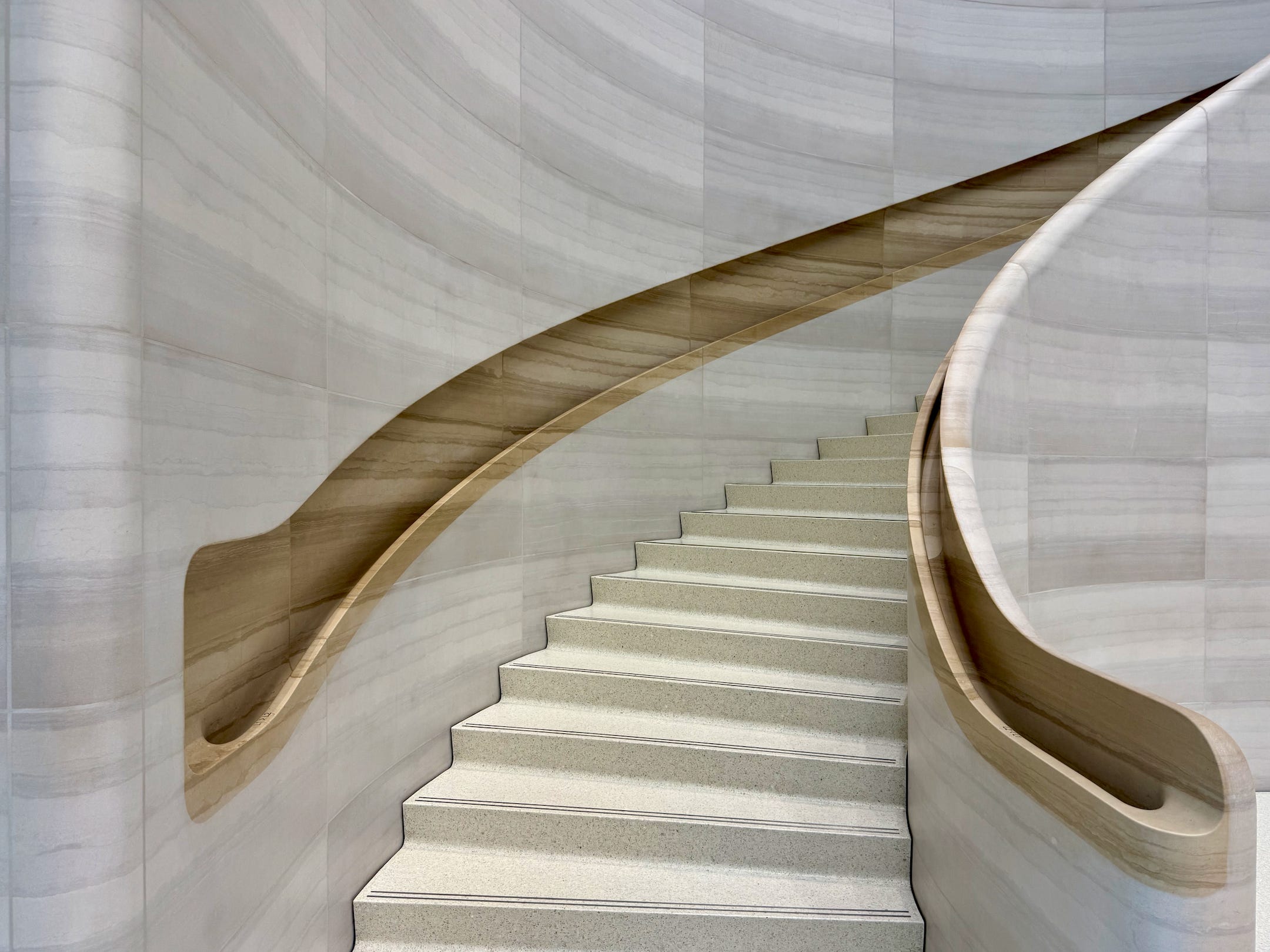
Years ago, shortly after it was completed, I was given a tour of Apple Park in Cupertino, by a friend who was a former employee. It’s a space designed to within an inch of its life. Infinitely curved. Beautiful, if you’re into that sort of thing. I remember more than you might expect: the expensive iPads given trivial jobs, like taking orders at the cafe; the single-tree planter boxes, which double as seats; and most of all the negative detail on the handrails on the curved staircases between floors.
I caught myself feeling, self-righteously, slightly sad to see the exact same design replicated at the Apple Store in Singapore, on the stairwell from the ground floor up to the Genius Bar on the second. And, no doubt, in many other indistinguishable Apple stores around the world.
Does that detract from the experience of the original? Does it make it any less exclusive because it can be experienced and enjoyed by many more people in different places?
The previous week, visiting the Rijksmuseum in Amsterdam, I was distracted by the negative details on the handrails on the stairwells there too. The building dates from 1885. Almost as old as the modern idea of New Zealand. The original old Zeeland is a couple of hours down the road.
The interiors were reworked in a renovation completed in 2013. So I don’t know whether their handrails predate Jony Ive by several generations or not.
What even is original?
I have fond memories of a version of Orchard Road which may have only ever existed in my imagination. The sweaty, small, unique stores, filled to the brim with stock. Weird and wonderful electronic gizmos. And fake Rolexes.
You have to work a little harder, a bit further from the city centre, to find that version of Singapore now.
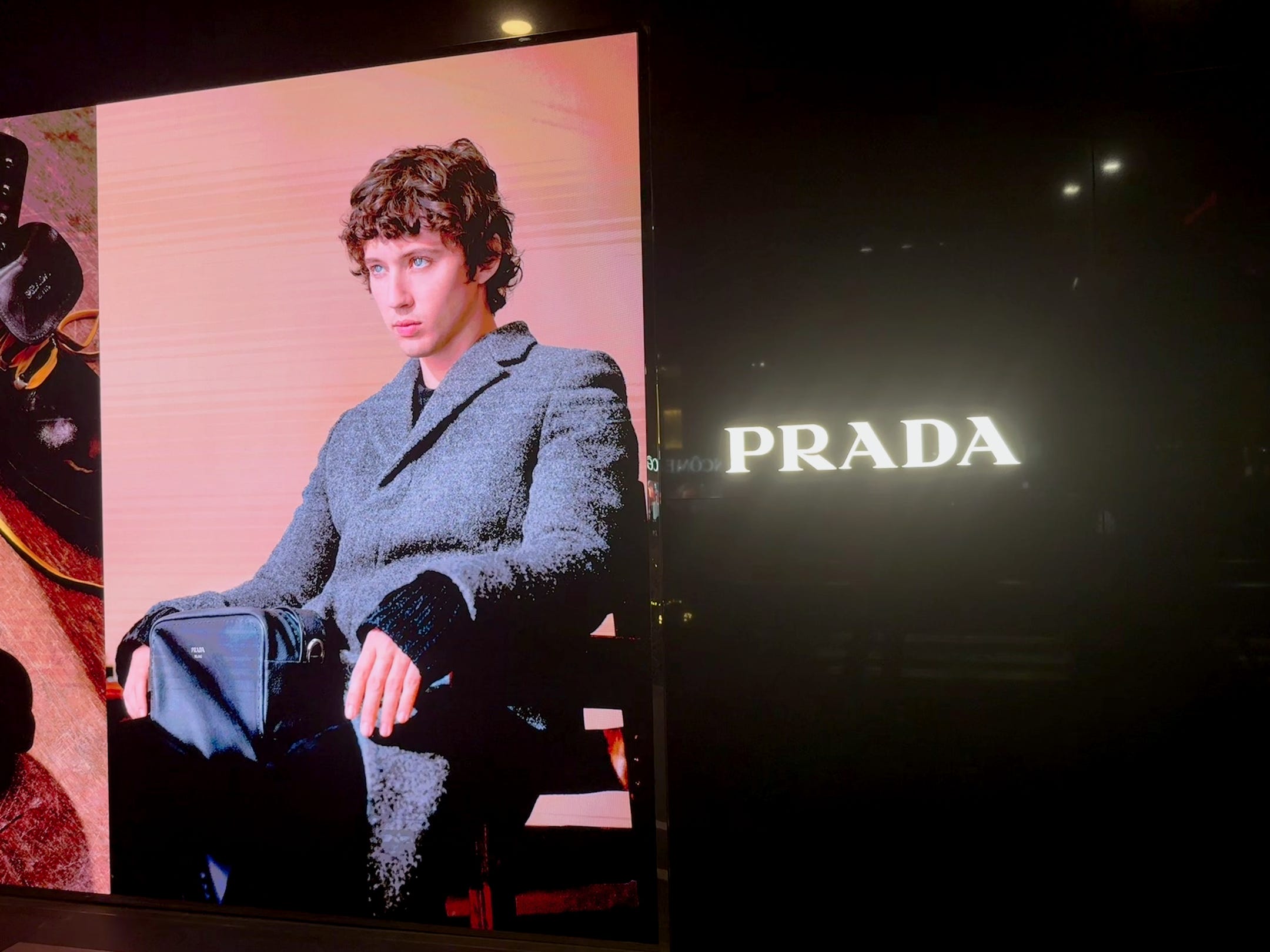
For its sins, these days, Orchard Road is mostly lined with glittery shopping centres rammed full with the same luxury brands. Gucci. Louis Vuitton. Chanel. Hermès. Dior. Prada. Shoulder to shoulder. Also indistinguishable. It could be Dubai. Or London. Or New York. Or the area beyond customs at any respectable international airport anywhere in the world.
We get the disconnect of a multi-storey-high billboard of Troye Sivan, wearing a thick Prada winter coat, in the tropics.
How many Bulgari stores can co-exist on a single street, I wonder, before they are no longer exclusive?
The most impressive of these malls have large empty atriums punctuated only by escalators. Negative space like that is a giant flex in one of the most densely populated cities on the planet.
I’m fascinated by the business model for these stores too. They seem to always be totally empty, with employees standing anxiously (and often visibly bored) waiting to serve absent customers. Are the infrequent sales enough to cover costs, or does that miss the point of these retail spaces entirely? Are they just more negative space?
The Rolex is real now, but the customer is fake.
Tu Tu Du Du
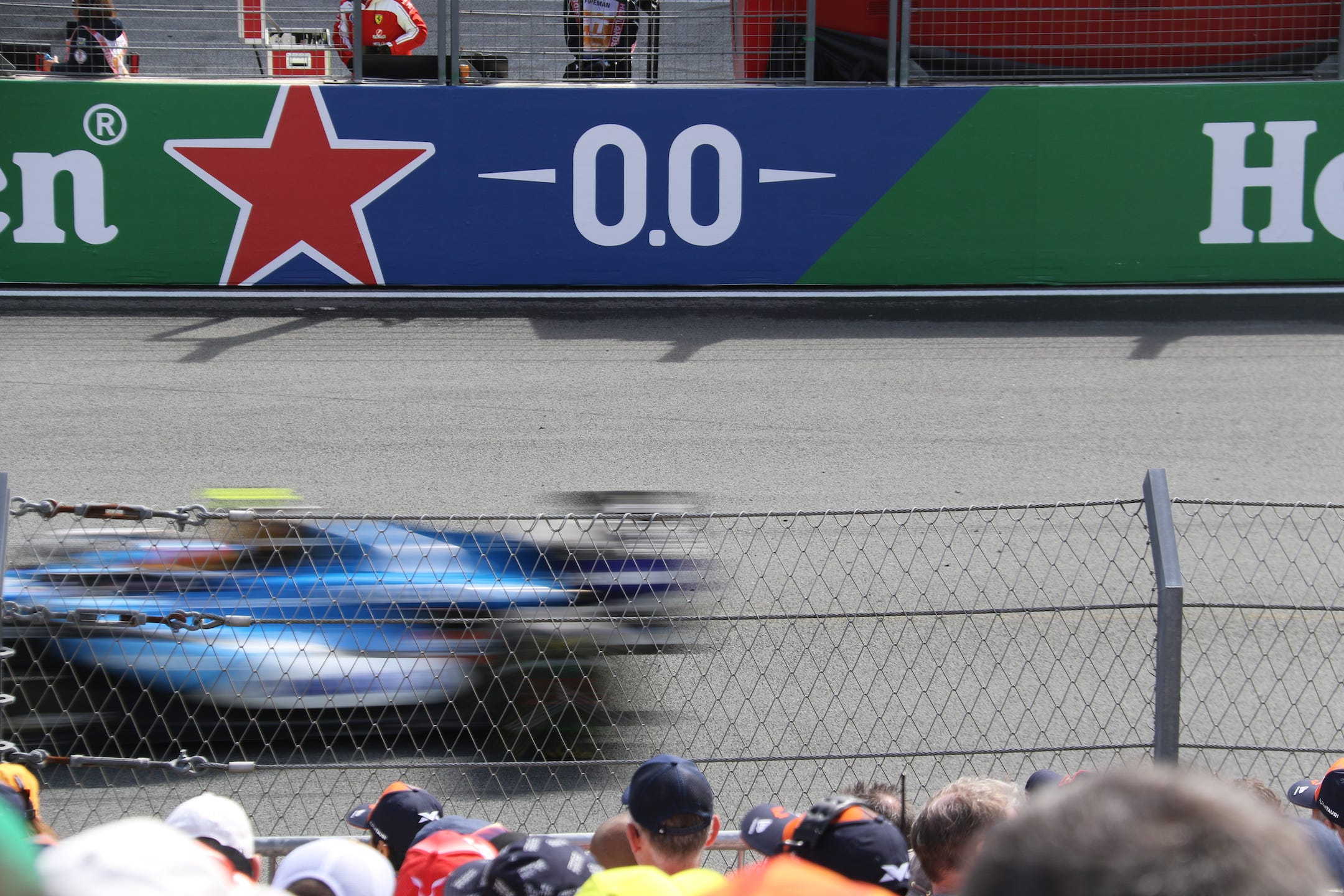
Circuit Zandvoort (home of the Dutch Grand Prix), a short train ride from Amsterdam
Perhaps I was already dialled into noticing luxury brands, after a week of Formula One with my daughter.
Attending a Grand Prix, at least the Dutch variety, is very short blasts of exhilaration, as loud cars roar past, separated by long periods spent enduring even louder punishing Euro Trash house music and a DJ imploring everybody to “wave your hands”, over and over and over.
Even the queue to get in seemed endless. It’s no trivial exercise scanning a QR code and confiscating drink bottles, umbrellas and fireworks from 100,000+ people when they arrive all at once. The line, maybe 30 people wide at some points, was entertained by people sitting on tennis umpire chairs with a loud hailer. “Hello. Guten Tag. Bonjour. Konnichiwa”, they would say. Then: “Tu Tu Du Du”. The crowd reliably responded to that prompt, in unison at the top of their lungs: “Max Ver-stap-pen”.
The organisers were upfront about it being the last Dutch Grand Prix - “the final lap” was their tagline - presumably unwilling to continue paying the significant hosting fees.1 Local-boy-turned-legend Max crashed out on the first lap. It was like the air went out of 100,000 tyres at once.
When I was a young web developer there was a style of web page design that was derisively called “NASCAR”, i.e. filled to the brim with different advertising, often animated, always annoying.
What NASCAR may have pioneered, F1 has perfected.
Which team, I wonder, manages to fit the most logos onto their cars and uniforms?
I quickly discovered I was well out of place there wearing AS Colour. Generic. Unbranded. How would anybody know which team I was supporting? I clearly had to pick: dark blue, or light blue, or papaya, or British racing green, or Italian racing red.
At the official Ferrari stall the branded shirts, with all of the logos, cost €120. Even more for the plain one with just the Ferrari stallion and the Puma puma.
Negative space is expensive.
Normalise wearing a t-shirt with up to 18 different corporate logos plastered in two columns down the front and on each sleeve, I suppose?2
Amongst the slate of sponsors, each team has their own luxury watch brand: Richard Mille (curiously shared by both Ferrari and McLaren), TAG Heuer, IWC Schaffhausen, Breitling, H. Moser & Cie, Tudor.
There is a small box waiting for the winning drivers right after the race is finished, containing their branded cap and their watch. It’s remarkable how often they need to scratch their face or adjust their collar in the television interviews. Then they spray champagne all over each other. Moët, naturally.
Well … not all of the teams. It seems the new Cadillac team still has an opening for a watch sponsor. Or maybe they know something the others don’t?3
What if the ultimate luxury is not wearing a watch at all? Negative space for the wrist.
That’s been my excuse for a few years, and I’m sticking with it.
Traffic
Zgornja Sorica, Slovenia
Frustratingly, it took me until day four to discover the refreshing qualities of the local 0.0% Radler Isotonic. Prior to that I’d stupidly ordered Coke, to keep it simple. This time I put aside the language barrier and just pointed. “What those guys are having.” It filled the gap perfectly, after a morning hauling a mountain bike up a mountain road to what would, in the opposite season, be the base of the Soriška Planina ski field (the chairlifts were chugging away still, taking walkers to a slightly higher starting point).
Zoom out. The chance to travel like this is itself negative space, of sorts. Filling the void between work. The escape from “normal” everyday.
The wonderful thing about doing it on a bike is that it puts you in the gaps by default. You can’t skip the bits between the places worth stopping at.
When visiting most really famous spots around the world, it’s easy to be overwhelmed by the number of tourists. Or, more accurately, by the number of other tourists.
We’re never stuck in traffic. We are traffic.
Everybody there makes the experience a little worse for everybody else there.
Maybe the next level up is not feeling pressured to visit those places at all. To have time to just explore, follow your nose and see what you see. You don’t have to rush to the Night Watch with everybody else, for example. You can pause to appreciate the handrails.
Or to go where there is, at first glance, less to see in the first place.
I’d started earlier in the week at Kranjska Gora in the Julian Alps, home of Slovenian ski jumping, and ridden through Bled (Slovenia’s Queenstown, complete with snarling traffic) and Bohinj (Slovenia’s Wānaka). The next few days took me to Tolmin (via a couple of short incursions into Italy), then down to the iconic hilltop castle towns of Šmartno and Štanjel, eventually finishing up at the coast in Koper.
425km. 28h 50m on the road. 6,593m of climbing, including two Hors catégorie climbs and lots more smaller ones. 14,781 calories according to Strava which was meticulously tracking every heartbeat. In a heatwave too.
Type Two Fun. But what a privilege!
I stopped for swims in lakes and rivers, and finished with a dip in the Adriatic.
I exhausted myself to the point where I was contemplating my choices. Several times.
I learned to pronounce place names like Črni Vrh. Later in the trip I realised the Dutch hogged all the vowels, forcing Slovenians to innovate.
I put myself, not for the first time and not by accident, into these enormous landscapes which can’t help but make us feel tiny and fleeting by comparison.
Look for the gaps. Appreciate the negative space. All the best stuff is hiding there in plain sight.
And turn off the wifi.

All photos by me, as described.
US$32m per year for the just completed contract. Allow me to recommend the excellent Acquired episode, if you’re interested in more details.
If we rank constructors based on t-shirts the podiums is:
3rd: Ferrari with 15
2nd: Red Bull with 17
1st: McLaren with 18
We did see one genuine Cadillac fan, in the wild, at Zandvoort. I regret not taking a photo with them to prove it.