


To finish 2025, I’m revisiting some of my favourite Top Three posts from the last year.
In January, just a few days before we needed to lock down the manuscript for How To Be Wrong, the government announced that Callaghan Innovation would be disestablished. The third section of the book, about the “technology ecosystem”, starts with a chapter looking back at the 2011 lecture delivered by Sir Paul Callaghan, which was perhaps the genesis for the crown entity established a couple of years later. I nervously searched for potential last minute edits, but was relived to discover only a small handful of references. In the end most were dealt with by the addition of this footnote:
Time will tell whether this amounts to more than a reshuffling of the deck chairs.
To complete this retrospective, here are three posts (actually two posts and one video) from January, March and October, looking back at the legacy of Callaghan - both Sir Paul and the Innovation agency named in his honour - and forward to what might come next…
This week only How To Be Wrong is available 25% off, direct from Electric Fence. You’ll wait a long time to get a better price than that. Enjoy!
🧨 Reset
This was first published in The Spinoff in January.
In 2011 the physicist Sir Paul Callaghan, one of New Zealand’s most distinguished scientists and a passionate advocate for economic transformation, gave a landmark speech he called “Sustainable economic growth for New Zealand: An optimistic myth-busting approach”. Many of his observations have become often-repeated mantras of New Zealand’s technology sector, including “be the place where talent wants to live”, “we better be prepared to be good at some pretty weird stuff” (anticipating correctly that the most successful companies would operate in obscure and difficult-to-predict niches) and that “just 100 inspired entrepreneurs could turn this country around”.
Tragically, Callaghan died of cancer just months later. However, his legacy lived on in a new Crown entity called Callaghan Innovation, established in 2013 with the vague responsibility for “making New Zealand business more innovative” through grants, technical services and business support. The intention was noble – to help transform New Zealand from a country dependent on primary industries to one driven by technology and innovation.
Fast forward to last week: prime minister Christopher Luxon’s state of the nation speech echoed many of those same ideas. At the end, he announced that Callaghan Innovation would be disestablished, with its “most important functions” reassigned elsewhere in the public sector.
For those of us who have built and invested in successful technology companies in New Zealand, this decision is overdue. Despite good intentions, the agency became bogged down in administering grants and subsidies rather than driving real innovation. Under pressure to demonstrate value, it spread its resources thinly across a huge range of activities – from managing R&D tax credits to funding startup accelerator programmes. But there was never any clear evidence that any of these initiatives actually helped create more successful companies.
There’s no question that improving our productivity and growing the economy beyond agriculture and tourism is key to our future prosperity. We’ve understood this for a long time. However, the ambition to be more innovative has never been our problem. The challenge we’ve struggled with all these years is actually doing it in any measurable way. Perhaps we missed a trick? Rather than Callaghan Innovation we should have called it Callaghan Execution.
Having worked with and invested in companies like Trade Me, Xero, Vend and Timely over the past two decades, I’ve seen firsthand what drives growth. The key question is always: What’s the constraint? What’s actually holding us back? As we consider the legacy of Callaghan Innovation, and more importantly think about what will replace it, let’s ask the same question of our economy as a whole.
Here’s an obvious answer: our national obsession with investing in real estate, rather than investing in much more uncertain but ultimately more rewarding productive businesses. Spending more and more borrowed money to buy little bits of our country off each other is a zero-sum game. We might think it’s how we “get ahead”, but it’s actually dragging us down.
Luxon himself exemplifies this – he’s often described as a “businessman”, but his investments after achieving financial success were rental properties, sold for profit years later. What kind of business is that? What value does it create?
Here’s another: our expectation that the government will underwrite business risk, while private shareholders capture the rewards. Founders and executives at early-stage companies spend countless hours pursuing grants, subsidies, R&D credits and development loans – many of which end up written off rather than repaid. Venture funds and “angel investors” expect government co-investment without hard questions. The government venture fund has been tilting at windmills for more than 20 years, with little to show for hundreds of millions invested.
Ask not what you can do for your country, but what your country can do for you, I suppose?
Here’s a third: our dismal savings record, which leaves us constantly looking overseas for investment. In the same speech last week the prime minister announced the creation of Invest New Zealand to “roll out the welcome mat” for foreign investors. But lack of a welcome mat hasn’t constrained our best startups from attracting international investment – companies like Xero, Vend and Rocket Lab have all raised millions offshore. Many of the most promising companies in the next wave of startups are already backed by Australian-based venture capital funds – including Tracksuit, Halter and OpenStar.
The big difference between New Zealand and Australia in this respect is that in recent years large superannuation funds in Australia have become significant investors in their venture capital sector, helping them to scale. In New Zealand we’re at least a generation behind because we’ve been so tentative on compulsory superannuation. If we had to pick one policy prescription to help us close the gap with Australia, matching their settings on this would be a great first step. Is there any politician here brave enough to propose that?
I applaud the prime minister for turning our attention back to these fundamental questions about New Zealand’s economic future. But aspiration alone is insufficient. What are we actually going to do differently?
Rather than simply targeting “more startups, more IPOs, more inbound foreign investment” – which are inputs – we should understand and measure how startup companies contribute to the broader economy. This means tracking metrics like how much they pay their employees and how much of the capital they raise is spent locally. After all, we don’t tax capital gains in New Zealand, but we do tax operating expenses through PAYE and GST. The only companies that will drive our future prosperity are those that create high-paying local jobs and sustainable growth.
The end of Callaghan Innovation is a necessary reset. While it’s difficult news for those affected, hopefully many of them can find roles working directly for our fastest-growing companies, which are constantly seeking skilled workers, rather than supporting them indirectly. That’s one of our biggest constraints – we need more New Zealanders choosing to work on and invest directly in these businesses. Perhaps then we can move beyond talking about the theoretical benefits of innovation to actually delivering it.
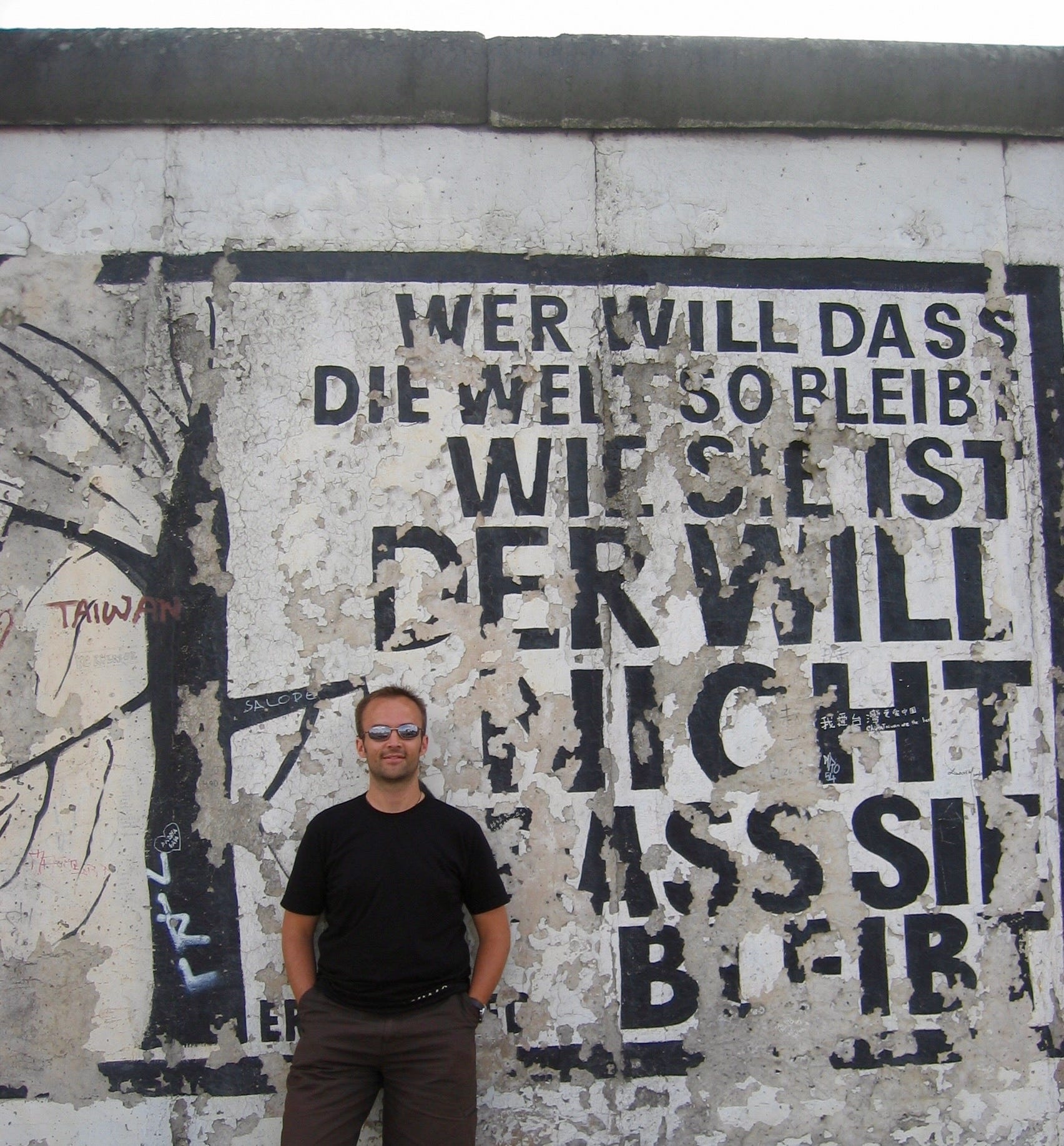
After the reset comes the rebuild.
Wer will, dass die Welt so bleibt, wie sie ist, der will nicht, dass sie bleibt.
Which roughly translates to:
If you want the world to remain as it is you don’t want it to remain at all.
🚧 Build
This was first published on Top Three in March
It is easy and quick, often instantaneous, to demolish things. It is hard and slow work to build new things, and often even harder and slower work to improve existing things.
In many of the media interviews I done this year I’ve been asked about recent government policy decisions - especially the decision to disestablish Callaghan Innovation. My experience working on and investing in startups for over 25 years gives me a rare perspective. I’ve seen the same patterns repeat and the same mistakes made, often because those implementing policies have never been in those positions themselves.
I’ve been asked what advice I would give the Prime Minister and others who are (hopefully) currently thinking about what comes next.
What is the one thing they could do that would finally unlock the potential of the ecosystem?
My answer to that is simple: it’s the wrong question!
I would recommend these people read the whole book, obviously, but specifically the chapter towards the end called “The silver bullet”. Perhaps this might convince them that this search for a single thing - often an idea that has worked in a completely different context somewhere else in the world - is a mirage, and that anybody who is promoting those sort of magical short-cut solutions is probably trying to sell something that will mostly extract value.
We have been trying to build a startup ecosystem for decades. We have thrown a large amount of spaghetti at the wall.1 But how much has stuck? We don’t really know. And, for me, that’s the most depressing part. We just hoped that spending all of that money would produce good outcomes, but never really bothered to test those assumptions or measure the results en route. And, then when it was eventually obvious that it wasn’t working, we were not honest about that, perhaps hoping that the results would turn for the better before they were exposed. As I describe in the book, that’s the worst way to be wrong.
After the announcement, I went back and added up the numbers:

As the graph shows, of the $2.8 billion various governments have spent on Callaghan Innovation since it was established in 2013, only $1.7 billion was distributed as grants. Meanwhile, over $1.1 billion went to employee and supplier costs - essentially the overhead of running Callaghan Innovation itself. Even putting aside the huge headline amounts, even that ratio of operating costs vs funds distributed to companies is eye watering. What do we have to show for it?
The most depressing bit about this for me is that it didn’t work. We desperately needed it to work. If the answer to “what now?” involves asking all the same people what they want to try next, then we should expect more of the same outcomes.
Here is the paradox. When I’m asked about the ecosystem I say that it is today in better shape than it has ever been. For me the ecosystem isn’t the government organisations and accelerator programmes and shared working spaces and venture funds (or funds-of-funds) or angel groups or business awards or innovation showcases … or countless other derivative things. It’s the crazy people who start these companies and the much larger group of less-well-known-but-still-vital people who work with them to grow the businesses and invest directly in them. That’s the hard grind.
Nearly everybody who talks about wanting a larger, more vibrant and more successful ecosystem misses this. They aspire to create multiple companies at once but don’t really know what it takes to create one. The companies that are created by this system are exactly what we should expect: fragile, precarious, and underwhelming.
While others were debating about how to build an ecosystem, and waiting for somebody else to do those hard bits, those of us who just got on and did it at companies like Trade Me, Xero, Vend, Timely and many others realised: the best way to grow an ecosystem is to create one great company. If enough of us did that we would have a much larger ecosystem.
So when we think about what it will take to unlock growth at this level, these are the questions they should be asking instead:
Who are the specific people we are trying to help?
What’s currently holding them back?
How can we remove that constraint?
How will we know it’s working?
I hope we don’t look back in another ten years and say: those are good questions, perhaps we really should have asked them at the time.
(╯°□°)╯︵ ┻━┻
🎓 Lecture

In October I was invited to present the Dean’s Lecture at the Faculty of Engineering and Design at the University of Auckland. It was an opportunity to wrap up a lot of these ideas I’ve been writing about and talking about for many years in a single presentation:
Callaghan, Rebooted: Why we need 10,000 executors not 100 lone geniuses
Thanks for reading in 2025. Top Three will return with something new in 2026…
Header Photo: Chihuly in the Botanic Gardens, Adelaide, March 2025.